"Artificial Intelligence for Prostate Cancer Detection and Screening on MRI in Global Populations: The SCARLET-1 Study" — in Radiology
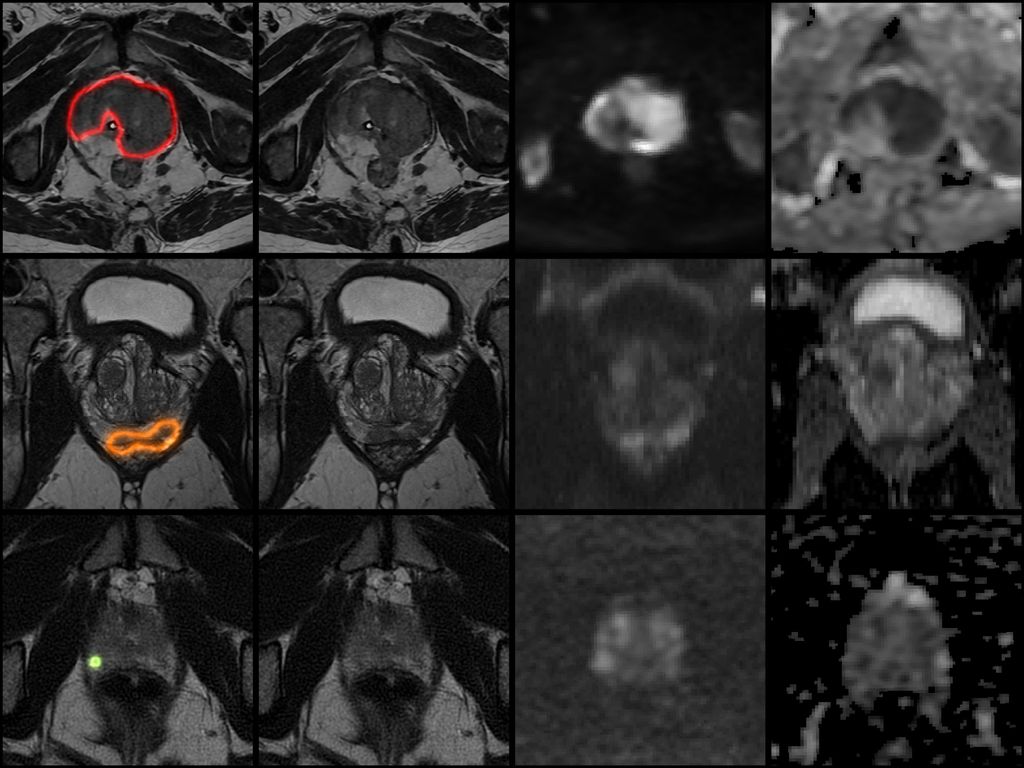
The SCARLET-1 study is now published in an early-access format in Radiology, the flagship journal of the Radiological Society of North America (RSNA). Building on the 2024 PI-CAI study in The Lancet Oncology, SCARLET-1 represents the next major step in our efforts towards advancing AI for prostate cancer detection on MRI, and is one of the largest and most geographically comprehensive investigations of AI for prostate imaging to date.
👥 22,445 prostate MRI examinations (21,252 patients; 46 cities, 22 countries).
🩻 Of which, 1,974 patients (20 external cities, 12 countries) across three landmark clinical trials (spanning diagnostic and population-based screening settings) were included for independent external validation.
🧬 Extensive subgroup analyses, encompassing patient age, ethnicity, cancer risk, tumor location, MRI image quality, and site-level performance.
🏥 𝗧𝗼𝘄𝗮𝗿𝗱𝘀 𝗥𝗲𝘀𝗽𝗼𝗻𝘀𝗶𝗯𝗹𝗲 𝗖𝗹𝗶𝗻𝗶𝗰𝗮𝗹 𝗔𝗱𝗼𝗽𝘁𝗶𝗼𝗻 𝗼𝗳 𝗔𝗜
Healthcare systems, clinical guideline committees, trial investigators, policymakers, and professional societies are all working to establish implementation guidance around a critical question: can medical AI systems, certified following one-time validation in narrow settings, remain reliable through broader implementation over time? SCARLET-1 demonstrates why this cannot be assumed, and how some of the relevant safety considerations only become apparent when AI systems are evaluated across sufficiently large, heterogeneous, and geographically diverse populations. Despite strong overall results on par with the average radiologist, SCARLET-1 showed that the same AI system can perform very differently between different hospitals based on the case mix and image quality. Local validation, site-level calibration ("one size does not fit all"), and ongoing performance monitoring remain essential.
🌍 𝗧𝗼𝘄𝗮𝗿𝗱𝘀 𝗜𝗻𝗰𝗹𝘂𝘀𝗶𝘃𝗲 𝗮𝗻𝗱 𝗚𝗹𝗼𝗯𝗮𝗹𝗹𝘆 𝗥𝗲𝗽𝗿𝗲𝘀𝗲𝗻𝘁𝗮𝘁𝗶𝘃𝗲 𝗔𝗜
Encouragingly, SCARLET-1 demonstrates no meaningful differences in AI performance across patient age or ethnicity groups. However, the study group cautions that sample sizes and representation from the Global South remain limited. To this end, the study group warmly invites researchers and clinicians from regions not yet represented in SCARLET-1 to consider joining them in the next study. Further international collaboration and validation, particularly in historically underrepresented regions, will be crucial to establishing whether the benefits of medical AI can be delivered equitably across healthcare systems worldwide.
👉 Read the full, open access publication here!
Congratulations to Anindo Saha, Joeran Bosma, Jasper Twilt, Maarten de Rooij, Jurgen Fütterer, and Henkjan Huisman for their work!
← Back to overview